Redesigning Dialogue: Why Art Institutions Must Rethink Cultural Diplomacy

In an era where traditional diplomacy is being disrupted by rapid geopolitical shifts and digital acceleration, cultural institutions find themselves standing at a crossroads. No longer are museums and art spaces mere keepers of heritage; they are now becoming frontline actors in shaping soft power and cross-border influence. But to fulfil this role meaningfully, they must move beyond exhibitions-as-usual and enter a new phase: structural cultural diplomacy.
From Exhibition to Infrastructure
Art exhibitions have long been used as tools for national image-building. However, the model of temporary shows, isolated delegations, and symbolic gestures has reached its limit. Audiences and stakeholders today demand more than aesthetic spectacle; they seek substance, continuity, and impact. What we need now is a shift from ephemeral events to durable infrastructures of cultural exchange.
This means rethinking programming models. Instead of "import-export" shows, institutions must co-design long-term initiatives: joint research fellowships, co-curated archives, cross-institution residencies, and embedded dialogue mechanisms. In short, art institutions must learn to think and act like architects of trust.
Beyond Symbolism: Towards Co-Construction
True cultural diplomacy today is not about showcasing national pride, but about co-constructing platforms of shared meaning. The most compelling projects are no longer those that export an image, but those that facilitate co-authorship, where artists, curators, and scholars from different contexts shape narratives together.
Such approaches require deep investment in relationship-building, legal literacy across jurisdictions, and most importantly, the willingness to share authorship. Cultural institutions must ask: Are we creating platforms for dialogue, or merely stages for display?
Case in Point: The Sino-Italian Cultural Relay
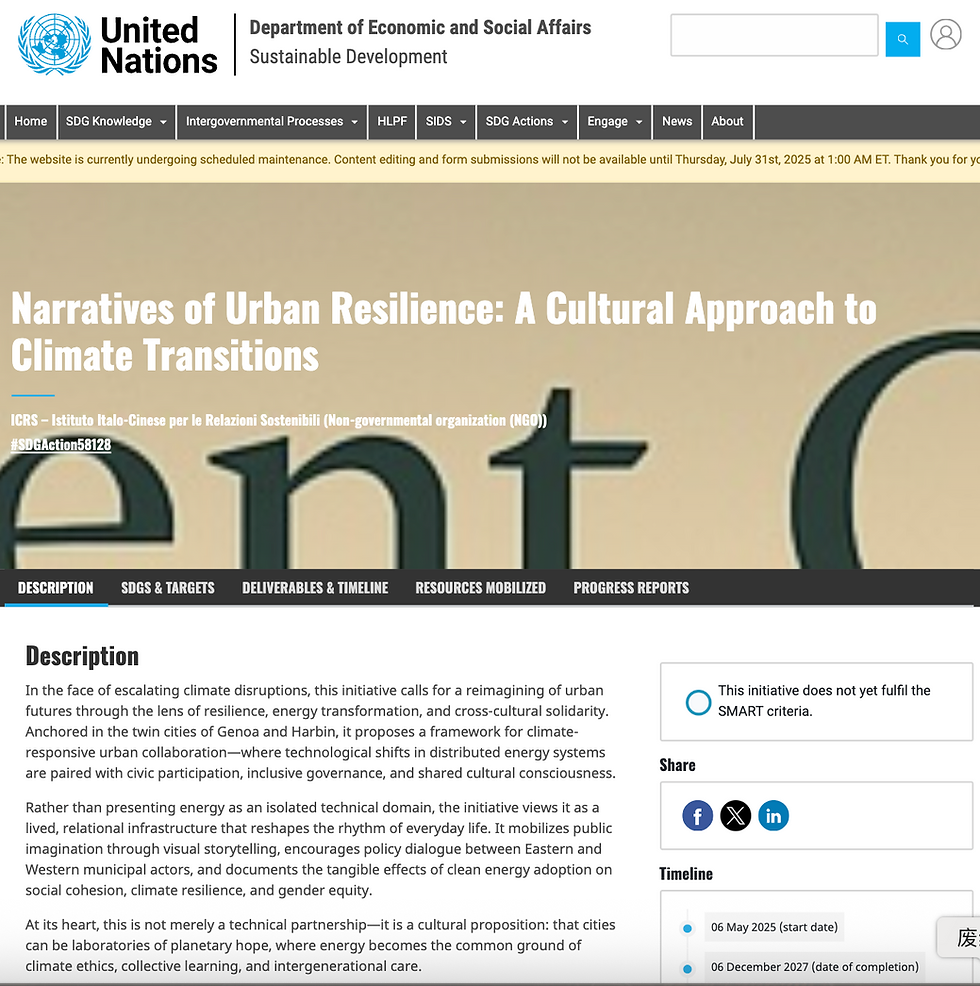
Our institute has piloted several initiatives to embody this ethos. In recent China-Italy exchanges, we have moved beyond single-venue shows to build multi-nodal collaborations involving universities, museums, independent archives, and media. These platforms are not simply about showcasing Chinese artists in Italy or vice versa, but about creating living ecosystems of mutual visibility, critique, and growth.
This model offers a lesson: the future of cultural diplomacy lies in the ability to structure relationships, not just events.
Conclusion: Diplomacy is Design
Cultural diplomacy is no longer the domain of protocol and performance. It is a question of systems design. As the global cultural field becomes more multipolar, institutions must rise to the challenge of redesigning the very grammar of exchange.
For those willing to rethink their role, the reward is not just relevance, but resonance. The art world doesn’t just need better exhibitions. It needs better structures.


Comments